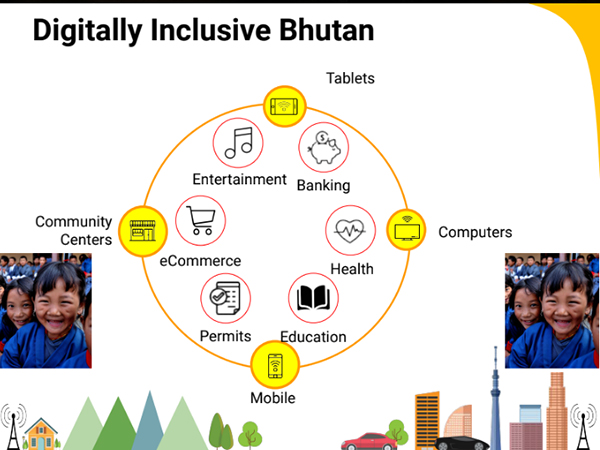
In this unit, I learned about how Information and Communication Technology (ICT) is utilized in education, particularly in Bhutan. I found the idea of Digital Drukyul very meaningful, as it aims to build a modern and advanced Bhutan. It demonstrates the importance of digital skills and sustainable development for the country. At the same time, it also reminds us to protect Bhutan’s unique culture while moving forward with technology.
I found the ICT Curriculum Framework for Classes PP to XII very helpful. It explains the main principles, skills, and focus on learner-centered teaching, showing that technology should support, not replace, traditional methods. The curriculum is designed to give students important digital skills to succeed in a fast-changing world.
One of the most interesting parts of this unit was learning about the TPACK model. This framework explains how technology, teaching strategies, and subject knowledge need to be combined to create meaningful learning experiences. It made me realize that having strong knowledge in only one area is not enough so, teachers must know how to connect all three to meet students needs. For example, simply adding technology to a lesson does not make it effective unless it is carefully chosen to support the content and taught in a way that engages learners.
Learning how to use TPACK to evaluate digital tools has given me a valuable skill. Now, instead of just using technology because it is available, I can judge whether a tool really fits the subject, supports learning goals, and helps students understand better. For instance, in our class activity on
mathematical functions, we used Excel to apply formulas like SUM(), AVERAGE(), MAX(), and MIN(). This showed me how technology (Excel) can be meaningfully connected with pedagogy (hands-on practice) and content (mathematical concepts) to make learning both practical and engaging.
The presentation on TPACK was especially engaging because it used practical examples, showing how teachers can transform lessons with the right balance of technology, pedagogy, and content knowledge. These examples helped me see how TPACK can make lessons more interactive, enjoyable, and effective for learners.
Additionally, the principles of Universal Design for Learning (UDL) taught me how important it is to create inclusive classrooms where every student has an equal chance to succeed. UDL emphasizes providing multiple ways of presenting information, engaging learners, and allowing them to express what they know. By applying these design principles, I now understand how technology can be used to support diverse learners, for example, using visual aids, audio tools, or interactive platforms to meet different learning styles and needs. This has shown me that technology is not just about efficiency but also about equity and accessibility in education.
In conclusion, this unit has strengthened my understanding of the role of ICT in education. I now see its potential not only to make learning more engaging but also to build an inclusive and innovative learning environment in Bhutan, one that embraces technology while still valuing the country's cultural and educational goals.
Image source:


Comments
Post a Comment